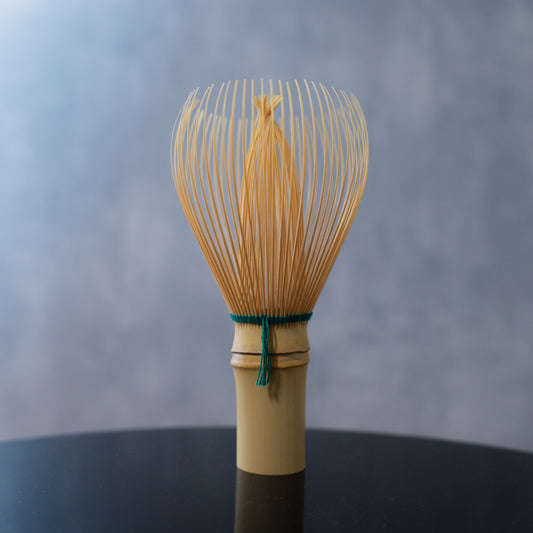
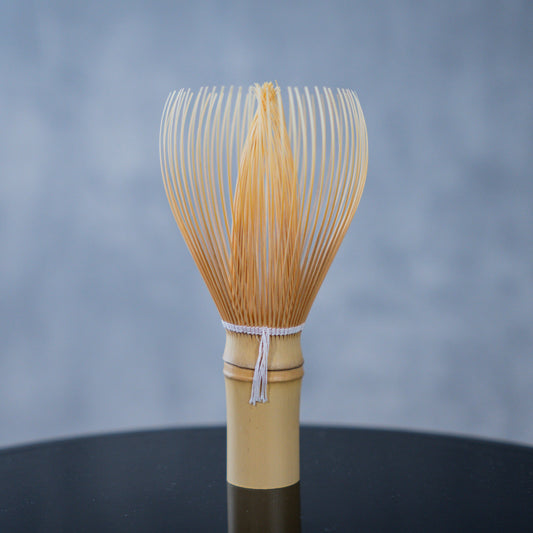
Discover how to effectively care for your takayama bamboo matcha whisk (chasen, 高山茶筅) to extend its life and ensure it consistently performs at its best. Simple, daily habits make a significant difference in maintaining your chasen's quality.

Quick Care Tips
- Soak the tines in warm water (~60°C / 140°F) before every use
- Rinse with clean water only after whisking — no soap, no dishwasher
- Air dry naturally in a well-ventilated area, out of direct sunlight
- Use a chasen naoshi (whisk holder) to preserve the original shape
- Replace when tines no longer create a proper froth
In This Guide
First-Time Chasen Use: Unboxing & Initial Preparation
Your new takayama chasen may be lightly glued to the bottom of the box for protection during shipping. Gently pull it forward to remove it. You'll likely see some glue and paper stuck to the base — this is completely normal. To remove the residue, let the bottom of the chasen's handle soak in warm water for a few minutes. This will soften and loosen the glue, allowing you to gently wipe it off with your fingers or a tissue. Let it air dry completely before its first use.


Before using a new chasen, always give it a quick rinse with clean water. A household bowl or basin works fine for this.

Then, soak the tines in warm water at around 60°C (140°F) for a few minutes. This step gently loosens and prepares the bamboo tines, preventing cracking and improving flexibility for optimal whisking.

Daily Chasen Preparation: Before Each Use

Always steep your bamboo matcha whisk in warm water before whisking matcha. Bamboo is sensitive to sudden temperature and humidity changes, so this quick step helps prevent damage and keeps the tines flexible. This pre-soaking ensures your chasen is ready to create a smooth, frothy matcha.

How to Clean Your Chasen After Each Use

Rinse your chasen as soon as possible after making matcha to avoid buildup and staining. Use clean water only — no soap, no dishwasher, no harsh detergents. These can damage the bamboo and affect the taste of your next matcha. Gently swish the whisk in the water while holding the handle. Avoid scrubbing or soaking the handle, as this can weaken the glue.

After rinsing, shake off excess water by flicking it downward once or twice. Then, let it dry naturally in a well-ventilated area, out of direct sunlight. Avoid placing it near heaters or in overly dry environments, as rapid drying can cause cracking or warping over time. Proper drying is crucial to prevent mold.
Maintaining Chasen Shape: The Importance of a Whisk Holder (Chasen Naoshi)

Over time, the tines of your chasen may begin to lose their original curl and open. To maintain its original shape and prolong its use, consider using a chasen naoshi (whisk holder or chasen stand). This traditional tool helps preserve the curve of the whisk and supports proper drying, preventing mold and warping.

When to Replace Your Chasen: Understanding Natural Wear and Tear

Even with proper care, natural bamboo can develop small cracks or lose a tine — it's a normal part of the material's life. If your chasen still whisks well and brings your matcha to life with a good froth, there's no need to retire it right away. Continue using it as long as it serves you well. However, if it can no longer produce satisfactory foam or has significant damage, it might be time to get a new chasen.

Frequently Asked Questions
How long does a bamboo matcha whisk (chasen) typically last?
With proper care, a high-quality chasen can last several months to a year or longer, depending on frequency of use. Soaking briefly in warm water before each use, gentle cleaning, and proper drying are key to maximizing its lifespan.
Can I put my chasen in the dishwasher?
Absolutely not. Dishwashers use high heat and harsh detergents that will severely damage the delicate bamboo tines, causing them to break, warp, or crack rapidly. Always hand-wash your chasen with clean water only.
Why is my chasen turning black or developing mold?
Black discoloration may result from mold or from natural aging of the bamboo over time. Mold usually indicates improper drying. Always ensure your chasen is air-dried thoroughly in a well-ventilated area after each use.
What is the best way to store a chasen?
A chasen naoshi (whisk holder) is commonly recommended to help maintain the whisk's shape. Ensure the whisk is completely dry before placing it on the holder. In humid environments, it may be better to store the chasen upright on its handle in a well-ventilated area to reduce the risk of mold at the base.
How do I know if I need a new chasen?
You might need a new chasen if many tines are broken or missing, if it no longer effectively whisks your matcha to a frothy consistency, or if it shows signs of irreversible damage like severe warping that prevents proper use. Minor cracks or a few lost tines might be acceptable if it still performs well.
Build Your Tea Ceremony Set
Authentic Japanese tea ware, crafted with traditional techniques.